Field of Dreams: A Pilgrimage to Dyersville, Iowa
By The Trip Window
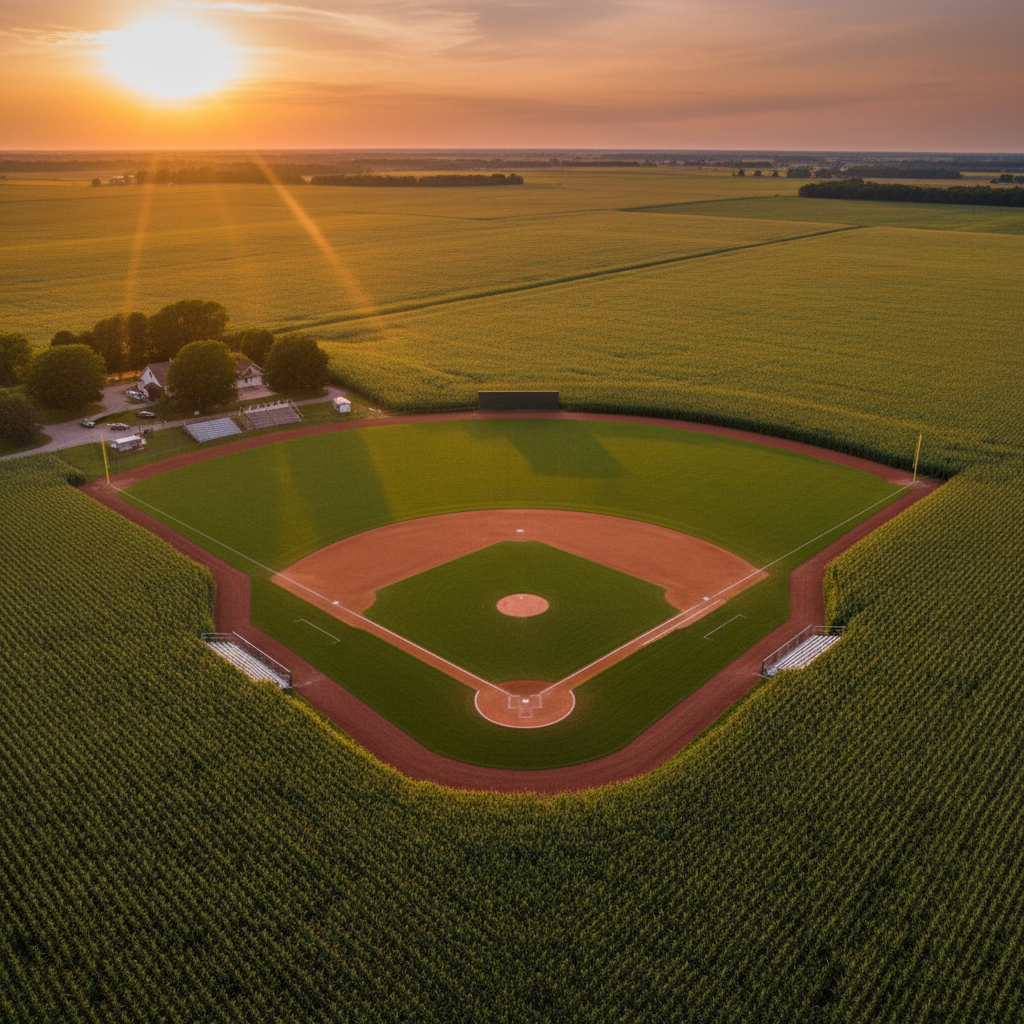
If You Build It, They Will Come
There is a moment, driving along the winding two-lane roads of Dubuque County, Iowa, when the cornfields part just enough to reveal a perfectly manicured baseball diamond. No stadium lights, no roaring crowds — just white chalk lines, a weathered wooden bleacher, and the soft rustle of cornstalks in the breeze. This is the Field of Dreams, and it is one of the most unexpectedly moving places in all of America.
Built for the 1989 Kevin Costner film of the same name, the field sits on a working farm in Dyersville, Iowa, a small town of about 4,000 people roughly 25 miles west of Dubuque. Decades after the cameras stopped rolling, it still draws hundreds of thousands of visitors each year — people who come not just for the nostalgia, but for something harder to name. Call it wonder. Call it hope. Call it the quiet magic of a place that somehow feels more real than the movie itself.
The History Behind the Field
The film was based on W.P. Kinsella's 1982 novel Shoeless Joe, and the production team chose the Lansing family farm in Dyersville as its primary location. After filming wrapped, the owners kept the field intact — a decision that proved prescient. Fans began arriving almost immediately after the movie's release, and they never really stopped.
In 2011, the property was sold and consolidated under single ownership. Then, in 2021, something extraordinary happened: Major League Baseball brought an actual regular-season game to the field. The Yankees and White Sox played under the Iowa sky, emerging dramatically from between the cornstalks in a scene that felt scripted even though it wasn't. The game was a sensation, and MLB has returned every summer since, cementing the field's place not just in movie history but in living baseball lore.
What to Expect When You Visit
The Field of Dreams is free to visit and open to the public from dawn to dusk during the warmer months (roughly April through November). There is a small gift shop and museum on-site, but the real draw is simply being there.
- Walk the bases. Visitors are welcome on the field itself. Run the bases, stand in the batter's box, stare out at the outfield — it's all fair game.
- Step into the corn. Yes, you can walk into the cornfield in the outfield. Many visitors do, reenacting the film's most iconic scenes.
- Catch a game. Youth and amateur baseball games are regularly played on the field throughout the summer. There's something deeply satisfying about watching actual baseball here.
- Visit the farmhouse. The white clapboard farmhouse from the film still stands and is part of the attraction. It's immediately recognizable to anyone who's seen the movie.
Getting There
The Field of Dreams is located at 28963 Lansing Road, Dyersville, Iowa 52040. The nearest major airport is in Dubuque (DBQ), about 30 minutes east. Cedar Rapids (CID) is roughly 90 minutes to the southwest. Most visitors drive, and the rural setting means you'll want a car regardless.
Dyersville itself is a charming small town worth an hour or two of exploration. The National Farm Toy Museum is located downtown and is surprisingly fascinating, and there are several good local restaurants where you can grab a meal before or after your visit.
The Best Time to Go
Summer is the peak season, and for good reason — the corn is tall, the weather is warm, and there's usually some form of activity on the field. If MLB schedules a game in Dyersville, book early; tickets sell out fast and the surrounding area fills up with fans from across the country.
For a quieter, more contemplative visit, consider coming in early September. The corn is at its most dramatic height, the summer crowds have thinned, and there's a golden, end-of-season light that feels almost cinematic.
Why It Still Matters
It would be easy to dismiss the Field of Dreams as simple nostalgia — a tourist trap built on a movie set. But spend an hour there and that cynicism tends to evaporate. People arrive from every corner of the country, often with parents or children in tow, and something happens to them on that field. Old men tear up. Kids sprint the bases with complete abandon. Strangers play catch.
The field taps into something universal: the idea that the things we love most — family, sport, the wide-open landscape of America — are worth preserving, worth seeking out, worth a long drive down an Iowa back road.
Go. It's worth every mile.